Sleep Divorce: Why More Couples Are Sleeping Apart (and Why It's Not a Bad Sign)
What is a sleep divorce? Learn why nearly a third of US adults sleep apart from a partner, the pros and cons, and how to keep intimacy strong if you do.
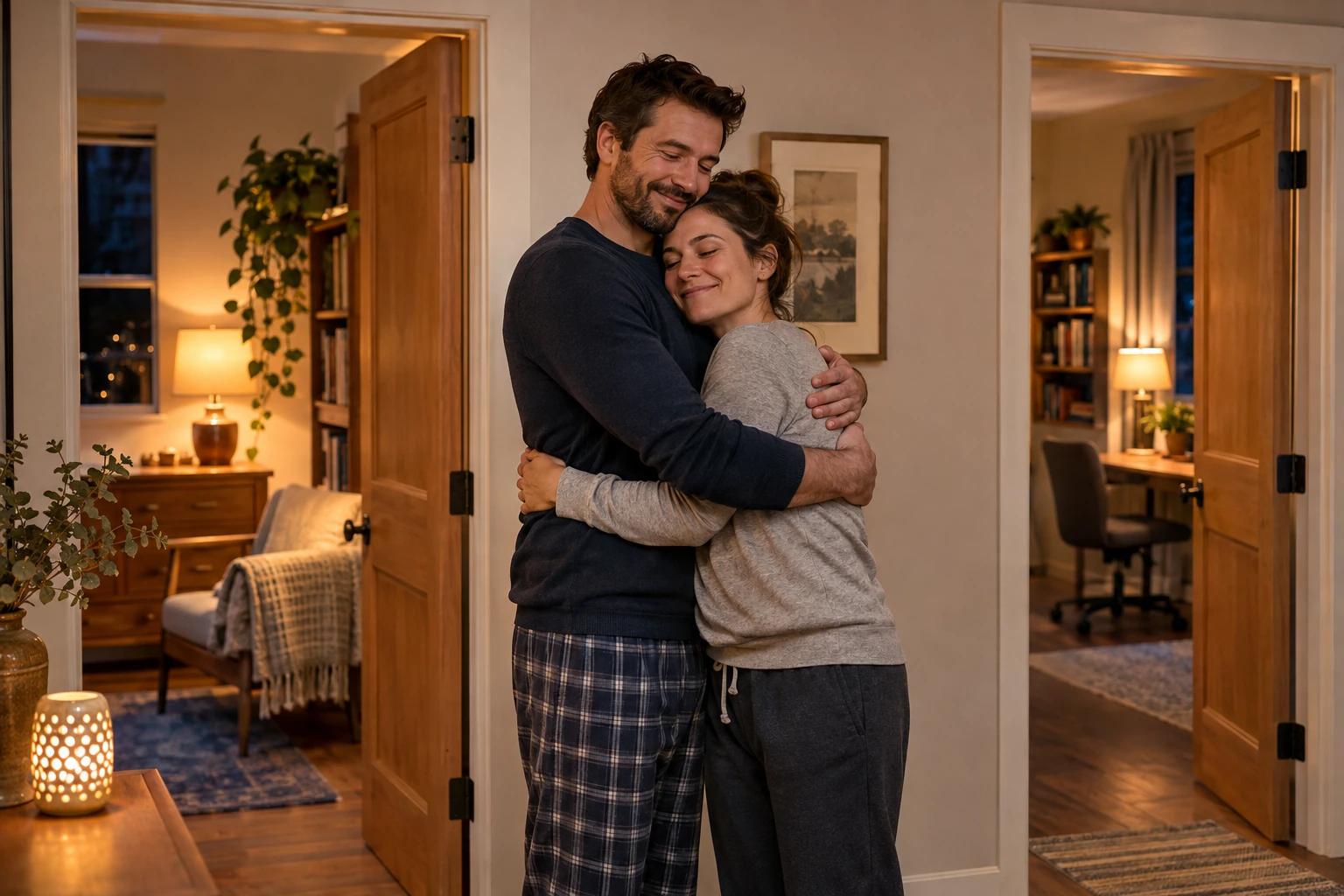
It's 2:47 a.m. Your partner is snoring like a leaf blower. You've nudged them twice, tried earplugs, and are now calculating how many hours of sleep you'll get if you fall asleep right now. (Not enough.)
At some point, many couples have the same thought: "What if we just… slept in different rooms?"
It used to sound like the beginning of the end. Now it has a name — "sleep divorce" — and a lot of couples are doing it.
This guide explains what a sleep divorce is, why it's become so common, the honest pros and cons, and how to keep your connection strong if you try it. Because good sleep and a close relationship don't have to compete. (For the closeness part, small rituals like a shared My Love widget can help.)
What Is a Sleep Divorce?
A sleep divorce is an arrangement where a couple sleeps apart — in separate beds, or separate rooms — to improve sleep. It isn't a breakup. It isn't legal. Despite the dramatic name, it's simply a sleep decision.
Sleep divorces come in different forms:
- Full-time separate rooms. Every night, different bedrooms.
- Part-time. Apart on work nights, together on weekends.
- Same room, separate beds. Two beds, one room.
- Separate blankets. Same bed, two duvets (sometimes called the "Scandinavian sleep method").
- Situational. Apart only when one partner is sick, traveling early, or snoring more than usual.
How Common Is Sleep Divorce?
More common than most people think. In a 2025 survey of 2,007 US adults, the American Academy of Sleep Medicine found that 31% had slept apart from a bed partner, either in another bed or another room (AASM).
The same survey found:
- Adults aged 35 to 44 were most likely to sleep apart (39%).
- Adults 65 and older were least likely (18%).
- 37% go to bed at a time other than they'd like to accommodate a partner.
- 15% use a silent alarm to avoid waking a partner.
In other words: lots of couples are quietly negotiating sleep. A sleep divorce is just the most visible version.
Why Couples Choose to Sleep Apart
- Snoring. The classic reason.
- Different schedules. Night owl meets early bird; shift work.
- Restless sleep. Tossing, kicking, blanket-stealing.
- Temperature. One runs hot, the other freezes.
- Insomnia or light sleep. Every noise wakes one partner.
- New baby or pets. Night feeds and a dog who needs half the bed.
- Health issues. Pain, illness, or recovery that needs more space.
Sleep Divorce Pros and Cons
| Pros | Cons |
|---|---|
| Better, longer sleep for both | Less spontaneous physical closeness |
| Fewer grumpy mornings and snaps | Can feel lonely at first |
| Each sleeps on their own schedule | Needs extra space (a second room or bed) |
| Less resentment about snoring or stealing covers | Others may misread it as relationship trouble |
| More energy for each other when awake | Bedtime chats may disappear without effort |
Is Sleeping Apart Bad for Your Relationship?
Not by itself. What matters is why you're doing it and how you handle it. Sleeping apart for better rest, with both partners on board, is very different from one partner moving out of the bedroom to avoid the other.
Signs it's working:
- You both agreed to it.
- You feel more rested and kinder to each other.
- You still make time for closeness and intimacy.
- It feels like a practical choice, not a retreat.
Signs to pay attention to:
- One partner feels rejected or pushed out.
- Physical affection has mostly disappeared.
- Sleeping apart is a way to avoid conflict or each other.
If it's become a way to avoid problems, that's worth talking about — and if you feel stuck, a licensed couples therapist can help. Our guide to 12 signs of a healthy relationship is a good gut-check.
How to Talk to Your Partner About a Sleep Divorce
- Lead with the goal. "I want us both to sleep better so we have more energy for each other."
- Make it about sleep, not them. Avoid "your snoring is ruining my life."
- Listen to their feelings. They may feel hurt or worried at first. That's normal.
- Try it as an experiment. Two weeks, then check in.
- Agree on rituals. Decide how you'll keep closeness (more below).
- Revisit regularly. A weekly relationship check-in is a natural place to ask how it's going.
How to Stay Close When You Sleep Apart
The key is replacing what you lose — bedtime chats, cuddles, waking up together — on purpose.
- Start the night together. Read, talk, or cuddle in one bed before splitting up.
- Have a goodnight ritual. A kiss at the door, a text, or a silly phrase that's just yours.
- Make mornings count. Coffee together, even for 10 minutes.
- Schedule closeness. It sounds unromantic, but planned intimacy is still intimacy.
- Keep weekend sleepovers. Many couples sleep together on non-work nights.
- Plan cozy evenings. Try these date night ideas for a cozy evening in.
- Stay connected in small ways. A Days Together widget on your home screen is a tiny daily reminder of your team.
For more ideas, see small daily habits that keep love strong.

Alternatives to Try Before a Full Sleep Divorce
- Separate blankets in the same bed
- A bigger bed or two mattresses pushed together
- Earplugs, white noise, or eye masks
- Seeing a doctor about snoring or insomnia
- Going to bed at the same time, then one partner moving later
- Part-time sleep divorce on work nights only
Find more relationship guides on the My Love blog. If you're planning a home together, our guide to moving in together can help you think about space early.
Conclusion
A sleep divorce isn't a sign your love is fading. For many couples, it's a sign they care enough to protect each other's rest — and show up better rested and kinder during the day.
If you try it, keep the closeness on purpose. Small rituals add up. To keep a little piece of each other on your home screen, download My Love on the App Store. Questions? See the My Love FAQ.